Clean Water Farm
The Clean Water Farm/Bay Friendly Award is sponsored by the Virginia Department of Conservation and Recreation. This award is given to recognize and thank Virginia farmers who implement nutrient management plans and are exemplary in their protection of the state’s soil and water quality. These individuals are role models who encourage others’ stewardship. Farmers spend time, energy and hard-earned money carrying out conservation practices that benefit many people. They themselves benefit because nutrients, pesticides, and chemicals they invest in remain with the land where they’re most productive. The soil necessary to grow crops also stays put because of conservation planting techniques. When these potential pollutants are kept out of surface and ground waters, citizens benefit by having cleaner water for drinking, recreation, industry, wildlife and transportation. On a local level, each District can nominate one farmer per river basin to win a certificate of recognition signed by the governor and a sign to post at their farm for this award. Above and beyond the local award, one farmer or farm from each of Virginia’s 10 major river basins is chosen for outstanding management that improves water quality. These 10 winners receive an additional award presented at a special recognition ceremony; one winner will then be chosen as a state winner.
Tidewater SWCD Clean Water Farm Awards
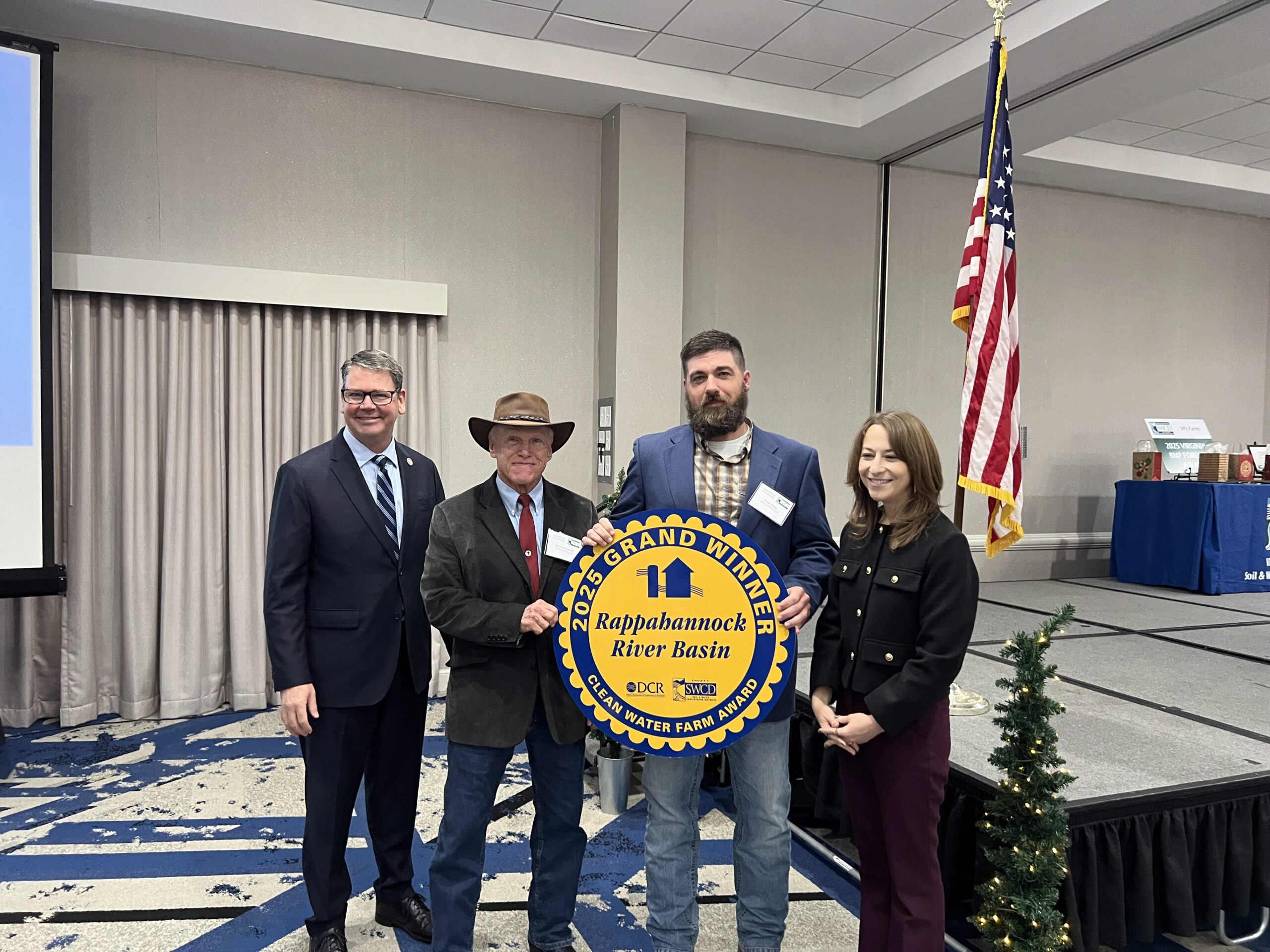
Operators Ronnie Russell and Evan Perry of Corbin Hall Farm accept the 2025 Rapphannock River Basin Award from the Secretary of Agriculture & Forestry Matt Lohr and the Secretary of Natural & Historic Resources Stefanie Taillon at the 2025 Annual Meeting of Soil and Water Conservation Districts.
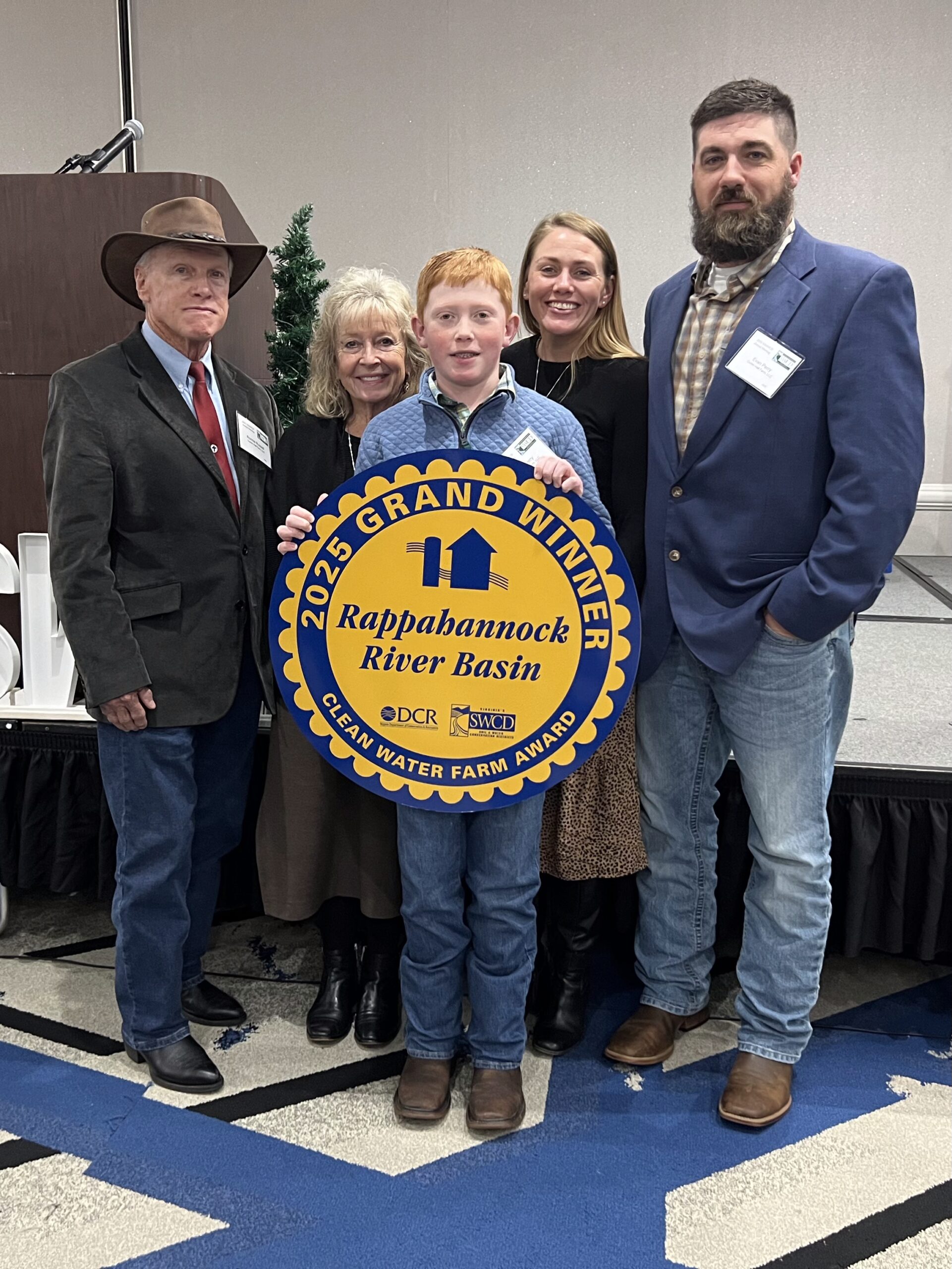
Pictured from left to right: Ronnie Russell, Annette Greenwood, Luke Perry, Peggy Perry, & Evan Perry
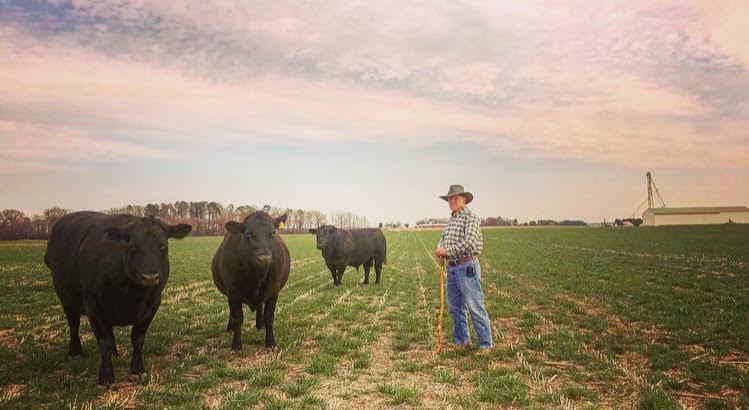
Ronnie Russell tends to the cattle grazing the cover crop fields on Corbin Hall Farm. Photo credits to the Virginia Beef Council vabeef.org
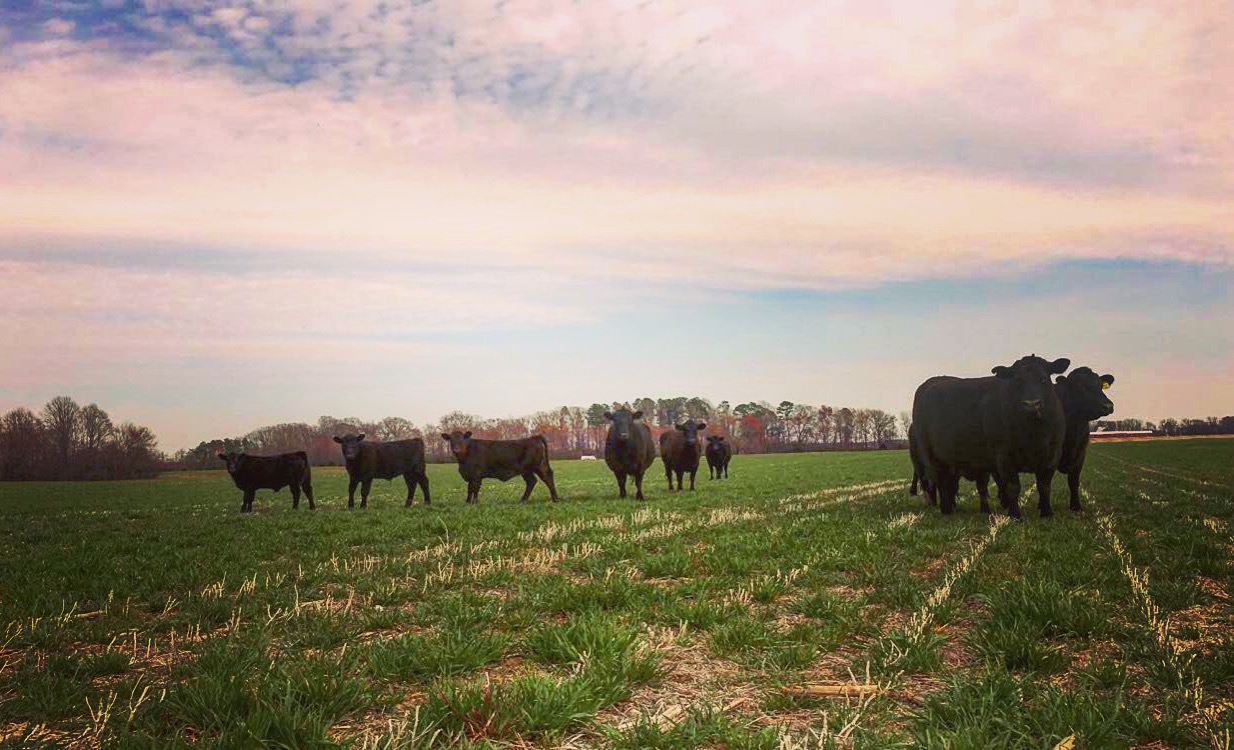
Cattle of Corbin Hall as shared for use by vabeef.org
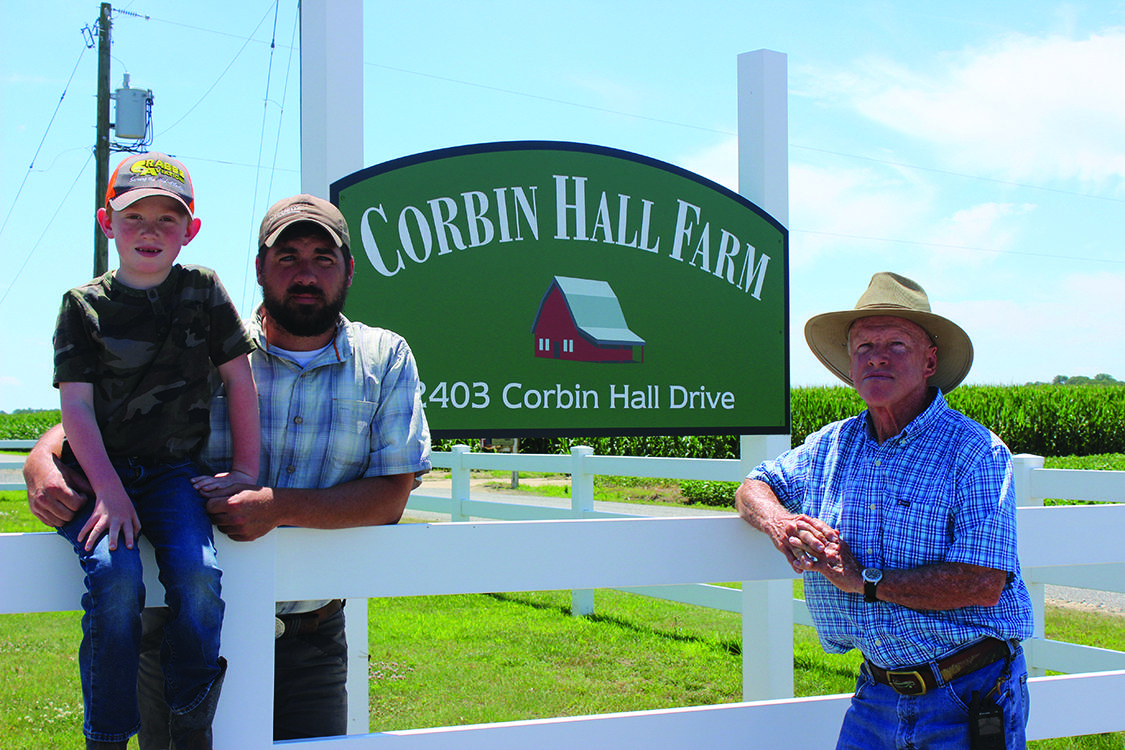
Luke Perry, Evan Perry, & Ronnie Russell at Corbin Hall Farm. (Photo by Sean Clougherty)
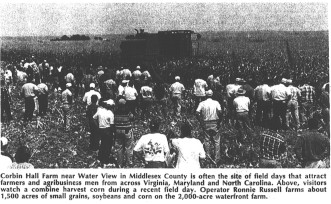
This newspaper clipping accompanied an article in the October 7th, 1999 edition of the Southside Sentinel newspaper. It depicts spectators watching farm operations manager, Ronnie Russell, utilizing a combine to harvest corn during the Virginia Ag Expo hosted at Corbin Hall Farm in 1998.
2025 Clean Water Farm & Grand Basin Award Winner
Tucked away in Middlesex County, Virginia, with over 350 years of agricultural production, you will find Corbin Hall Farm standing as a pillar of environmental and historical stewardship. The farm encompasses over 2,000 acres which are comprised of approximately 1,500 acres of cropland, 250 acres of pastureland, and 293 acres of woodlands, marshlands, ponds, and homesites. If you have ever visited Corbin Hall, you will remember the long entry way lined with highly productive agriculture fields. What you may not realize on your drive in, is that you are surrounded by water on 3 sides, with the Rappahannock River to the East, LaGrange Creek to the West, and Weekes Creek to the North. Corbin Hall Farm has 7 miles of shoreline in total. If you have never visited, it is truly a sight to see!
The land known as Corbin Hall Farm was once part of “Buckingham,” which was 4,000 acres granted to Henry Corbin from the King of England in 1676. Corbin Hall remained in Henry Corbin’s family for 2 generations before being bought and sold a series of times to different owners and developers. In the 1940s, Corbin Hall was owned by John Jackson of the Pittsburgh Steel Company and was known for its sweet potato production. It was later sold to Miller Lumber Company, who harvested the farm’s timber.
Among the owners of Corbin Hall Farm was W. Rufus Harrell and his wife, Louise. Mr. Harrell had begun his agribusiness career opening “Harrell’s Poultry Market” in Norfolk and later a butchering and packing operation, with his brothers, in Chesapeake, Virginia. Of all his enterprises, Rufus was most known for his liquid fertilizer manufacturing facilities he started in Albemarle, North Carolina in 1955 and expanded to Chesapeake in 1956. Tidewater Chemical Corps., as it was known, expanded to 12 branches in four states and was known as the largest independent fertilizer manufacturer east of the Mississippi River. His business interests continued to grow over time to include the grain elevator market and selling seed and chemicals for crop production.
Ronnie Russell’s father, Olden, and grandfather, Fletcher, had worked for Mr. Harrell in Chesapeake, VA since the 1930s. In 1959, Rufus and Louise Harrell purchased Corbin Hall Farm in Water View, VA. At age 13, Ronnie Russell, along with his family and about 20 head of cattle, relocated to Corbin Hall Farm, to begin sharecropping.
When Rufus Harrell purchased Corbin Hall, it had approximately 500 tillable acres and Mr. Harrell was firmly intent on expanding the cropping acres. Over the years, the Russell’s and others cleared more than 1,000 acres of timber to achieve Harrell’s goal.
After all of the ground disturbance from clearing the land, the sediment quickly became more noticeable in the surrounding waterways. In the early 1970s, Ronnie approached Mr. Harrell with his concerns about the erosion and convinced Mr. Harrell to let him plant sod waterways and buffers around the agricultural fields and water bodies. This was before the CRP program existed or producers were incentivized for implementing Best Management Practices. This is a demonstration of Ronnie’s stewardship of the land from very early on. Mr. Harrell would half-joking and half-serious tell others that Ronnie would have the whole farm planted in grass, if he would let him. Those sod waterways and buffers are still in place and maintained today. Since the Harrell’s purchased the farm, Corbin Hall has primarily been a grain farming operation, maintaining a crop rotation of corn, soybeans and wheat on 1,373 acres and they raise a small herd of beef cattle, of approximately 50 head.
Corbin Hall Farm was utilized as a demonstration farm for Tidewater Chemical Corps in the 60s and 70s. They would host dignitaries, policy makers and people from the farming community to highlight the products they were manufacturing and utilizing on their farm. The field events grew very popular garnering visits from USDA Secretaries, John Block and Earl Butz. They continued for 18 years at Corbin Hall Farm, showcasing Tidewater Chemical Corps’ fertilizer products and test plots for numerous seed companies. This was the start of the Virginia Ag Expo. After Mr. Harrell sold the fertilizer business in 1977, the state’s agriculture industry groups wanted to keep the field days going. Working with the Virginia Corn and Soybean groups in the early 1980s, they brought the field days back rotating to different host farms annually. After this restructuring, Corbin Hall Farm has been the host farm of the Virginia Ag Expo in 1994, 1998, 2003, and 2021.
Sadly, Mr. Harrell passed away in 2006 leaving the farm to his wife, Louise. A decade later, in 2016, she sold the farm to Walt Hurley, a local businessman who valued the farm’s rich history and intended to optimize its operation. After Mr. Hurley’s unexpected death only months later, his children, Rachel Hurley Kittrell, Sarah Grace Hurley, and Trip Hurley, have remained steadfast in fulfilling their father’s vision. They have improved many of the buildings on the farm and purchased updated equipment to gain more efficiency.
Despite the changes in ownership, Ronnie Russell and his family have remained an indispensable presence in farm operations for 66 years and counting. Ronnie started working for Mr. Harrell full-time when he graduated high school, but he will tell you he has been a farmer his whole life. He held the position of Farm Operations Manager for many decades. Despite handing the title over to his nephew about 5 years ago, he still can be found heavily involved in the operation, educational outreach and conservation on the farm. His nephew, Evan Perry, began working with him on the farm before and after school growing up. After attempting to branch out to another profession right out of high school, Evan quickly learned, he too, was born to farm. He rejoined his uncle at Corbin Hall Farm full-time in 2008 and took over as farm operations manager in 2020.
Operators, Russell and Perry, maintain a nutrient management plan, a conservation plan, and 3 resource management plans, all written by certified plan writers. They utilize conservation crop rotation to improve soil health, manage pest and disease by disrupting their cycles, enhance weed control, and increase crop yields due to better nutrient availability and increasing the soil’s microbial diversity. When planting corn, Corbin Hall Farm applies nitrogen and phosphorus at the time of planting to assist with seed germination and establishing a good stand. Additionally, they side dress their corn with nitrogen at the 6-leaf stage to ensure the plant gets the nutrients it needs during this important growth stage. Russell and Perry split apply their applications of nitrogen on wheat to support the plant during its growth, while reducing nutrient losses and protecting local water quality. They split apply nitrogen on their hay land and forage samples are taken and tested for improved harvest decisions and to enhance the health and productivity of the livestock on the farm. The operators believe in the importance of keeping living roots in the soil year-round. They plant cover crops on any of the row crop acres they don’t utilize for winter wheat production. Ronnie believes the most notable change and useful advance in farming for Corbin Hall was their adoption of utilizing a no-till planting system. Ronnie said wind erosion was a substantial problem on the farm prior to adopting no-till farming practices and planting cover crops. Evan and Ronnie both spoke about the vast improvement in their soil health and amount of organic matter they attribute to their no-till practices. Corbin Hall Farm has over 100 acres of grass or forested buffers greater than 35 feet. Sod waterways were planted around the farm in vulnerable locations to reduce the nutrients and contaminants that would otherwise flow into the adjacent waterways. As a very small-scale beef producer, they focus on sustainable land use and ensuring animal health. They utilize rotational grazing on the pastures during the growing season and range on cover crop acreage in the winter to minimize supplemental feed needs over the colder months. In collaboration with NRCS, livestock exclusion fencing was installed in 2011. The main pasture is surrounded by a grass buffer and additionally forested on 3 sides to further protect Weekes Creek and the Rappahannock River from agricultural waste run-off. Corbin Hall utilizes a drag harrow on pastures to break up and more evenly distribute the manure, to prevent a concentration of waste in any single area. They look for good genetics when purchasing the bulls they will breed to their cows and prefer to sell calves and cows locally to reduce the likeliness of some disease and health issues. With over 7 miles of shoreline to protect, Corbin Hall Farm has applied to the VACS program for the largest SE-2 Shoreline Stabilization practice in the state and has been working diligently through the red tape to get the project approved.
Corbin Hall Farm annually hosts school groups from Middlesex County Public Schools, Ware Academy, and Christchurch School for various on-the-farm agricultural education opportunities. They hosted Middlesex County FFA groups dating back to the 60s and 70s. In addition to hosting field days with Virginia Cooperative Extension for other agricultural producers, Corbin Hall Farm has supported VCE’s on-farm research by conducting field test plots for more than a decade. Additionally, they have planted test plots for agri-businesses, such as Pioneer. Ronnie Russell has been a lifetime member of the Virginia Soybean Association and has served as their president two separate times. He also served for over 30 years on the Virginia Soybean Checkoff Board, a position that is appointed by the Governor. Russell was elected the chairman of the Middlesex County FSA Board. He is also a member of Virginia Farm Bureau and served a term as Vice-President. Evan Perry is a member of the Virginia Farm Bureau Board. He is also a member of both the Virginia Corn and Soybean Associations.
Please help us recognize the significance of Corbin Hall Farm and its operators, Ronnie Russell (66+ years) and Evan Perry, for their continued contributions to local water quality, conservation, education, and their dedication to the agriculture industry across the state.
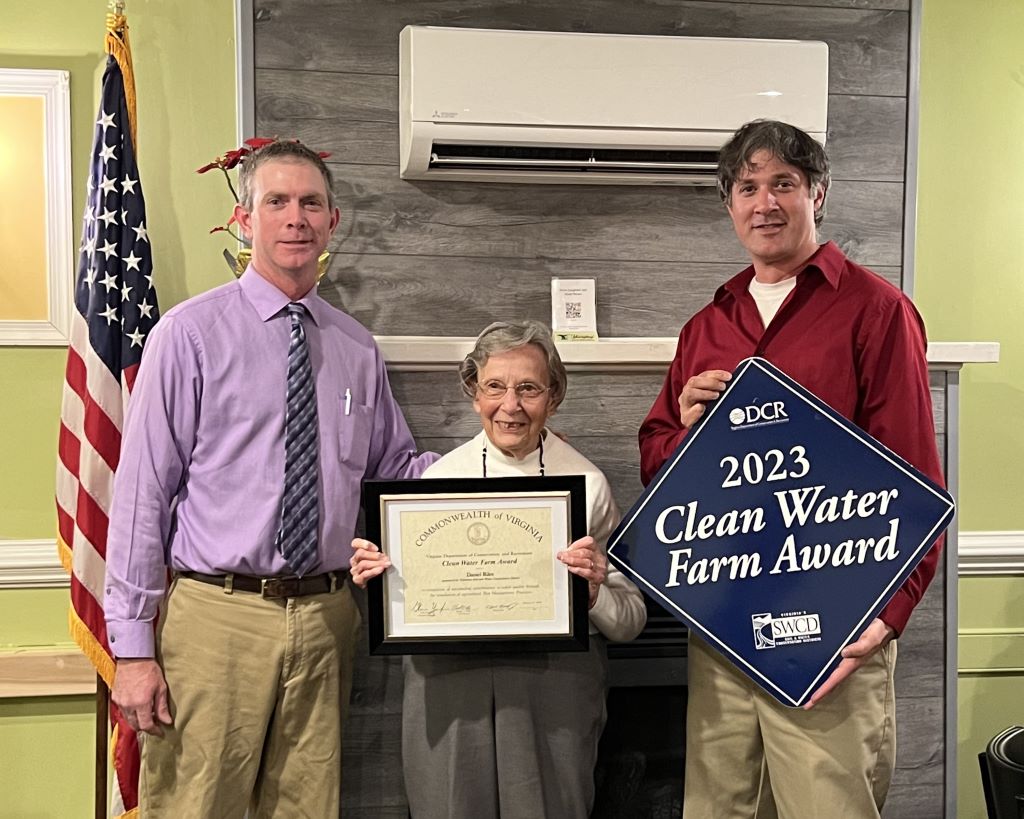
Chairman, Buck Richardson presents Francis and Daniel Rilee the 2023 Clean Water Farm Award
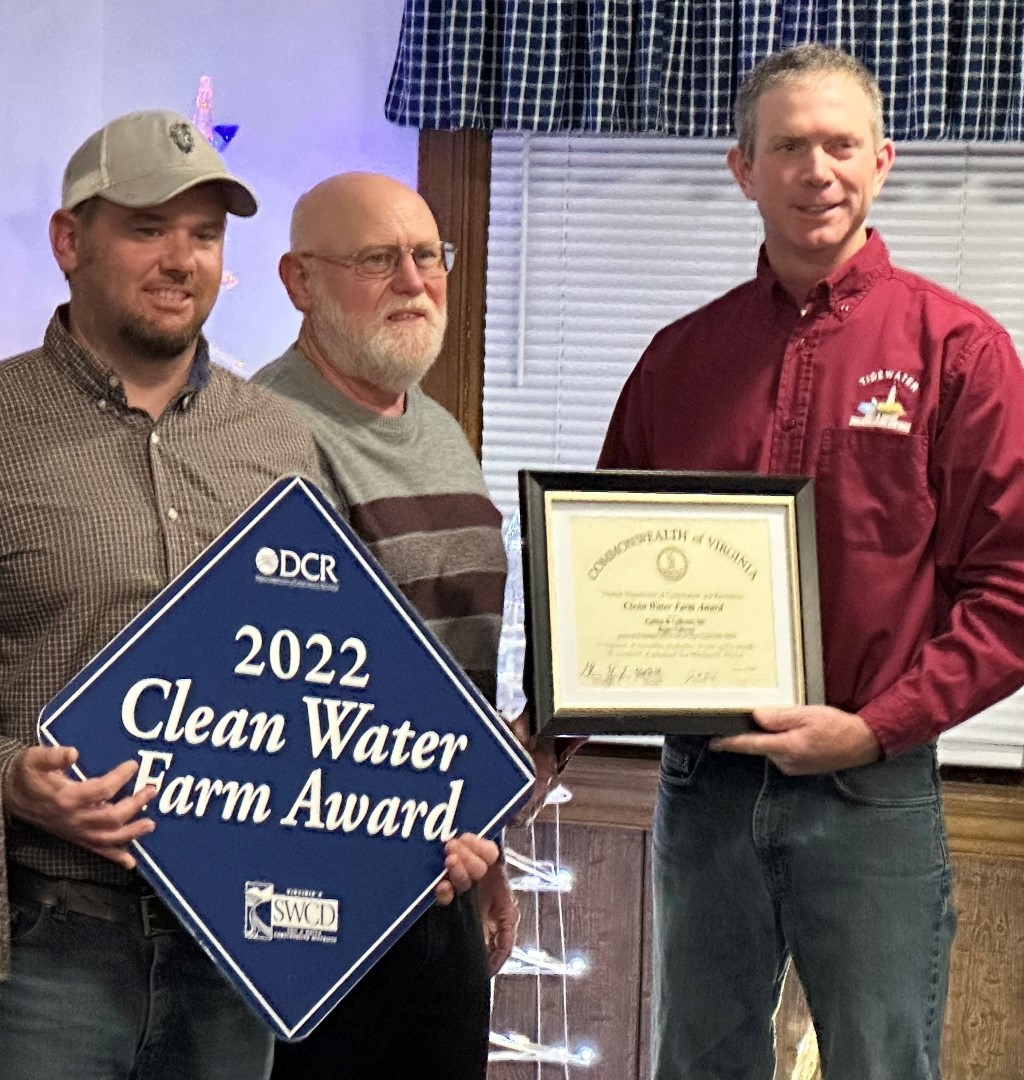
Chairman, Buck Richardson presents Roger & Dusty Calhoun of Carlton & Calhoun Farms Inc. the 2022 Clean Water Farm Award
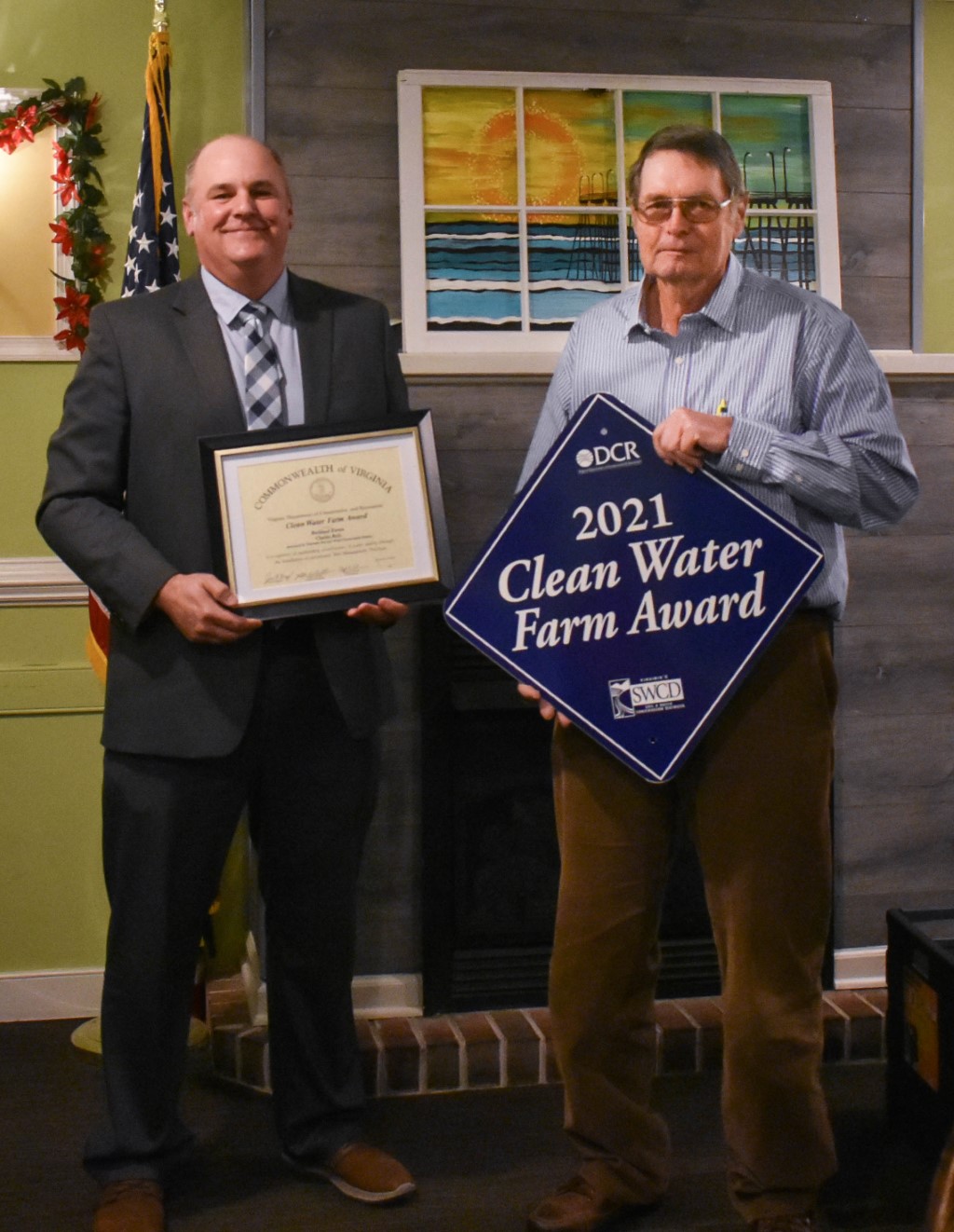
Chairman, Jason Bray presents Charles Rich of Richland Farms the 2021 Clean Water Farm Award
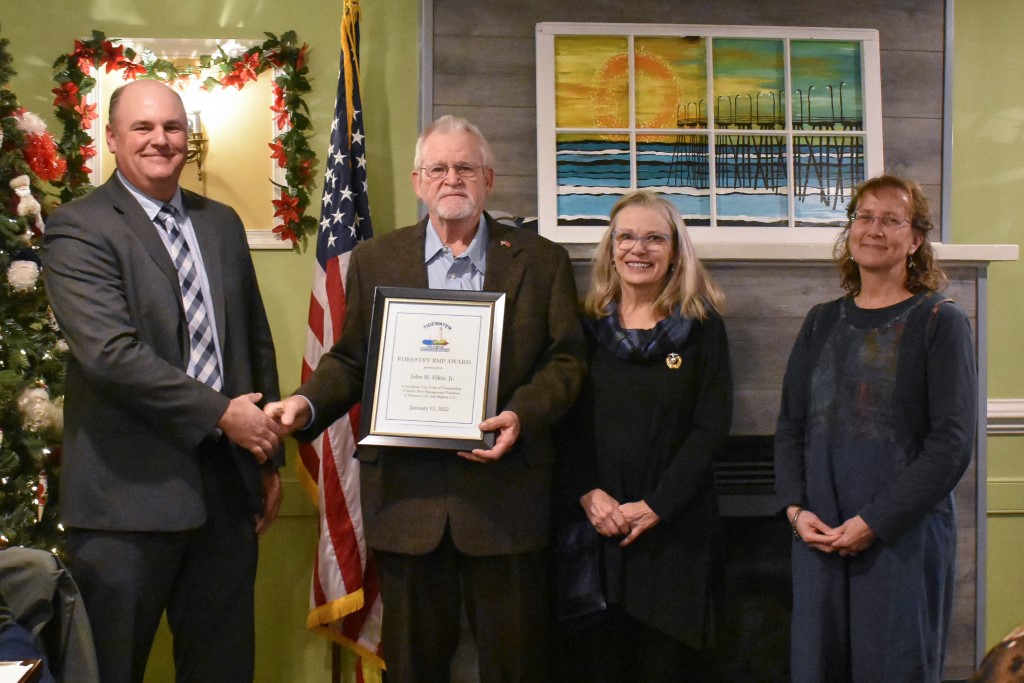
Jason Bray Presents the 2021 Tidewater Forestry BMP Award to John & Jane Elkins of Hunters, LLC & Bigfoot, LLC
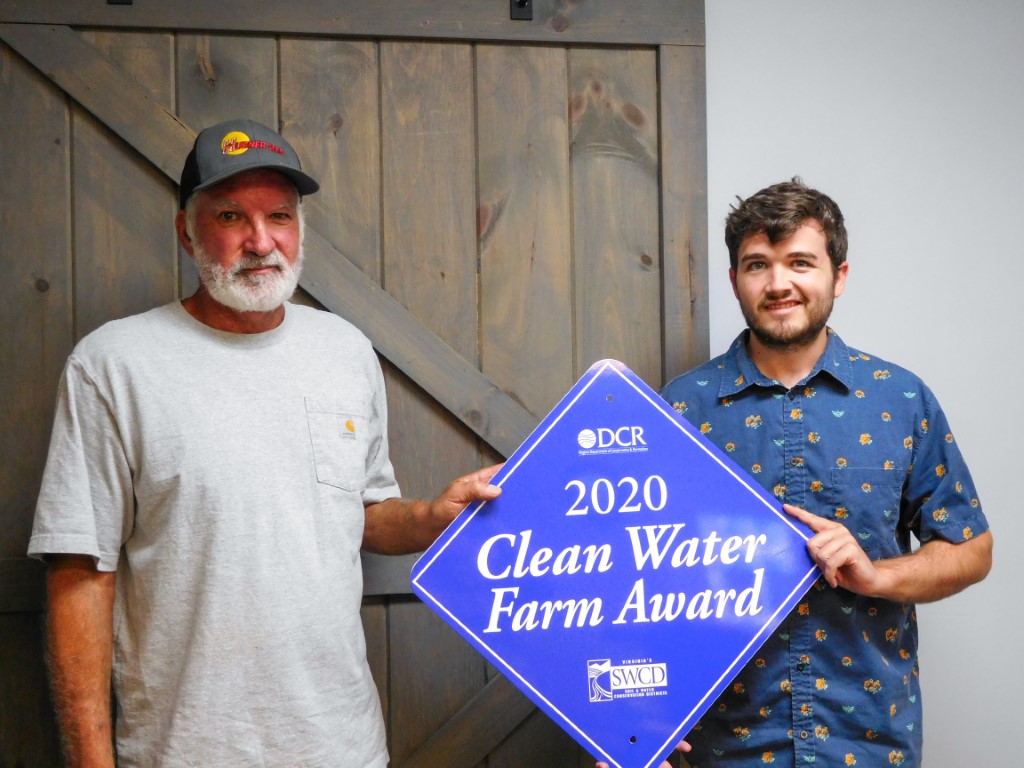
Conservation/ Education Specialist, Sam Markwith presents Jason Benton of Benton Farms, Inc. the 2020 Clean Water Farm Award